How to Start a Community Orchard Planting Project UK Neighbourhoods Will Keep
A community orchard planting project UK neighbourhoods can sustain begins with three things: secure land, a dozen committed people, and a planting plan that survives its first dry summer. Most successful schemes start far smaller than the founders imagine — twelve to twenty bare-root trees on a quarter of an acre, planted across two winter weekends for well under £1,500. The appeal is obvious: fruit trees are cheap, they need no watering rota after year three, and a mature apple tree produces 40kg to 150kg of fruit each autumn. The difficulty sits elsewhere, in leases, insurance, mowing agreements and the slow work of keeping forty volunteers interested for a decade. This guide covers the practical mechanics — land tenure, realistic budgets in pounds, variety selection for British conditions, and the volunteer structures that stop good projects collapsing in their third year.
What a Community Orchard Planting Project UK Groups Run Actually Involves
An orchard differs from a vegetable plot in one crucial way: permanence. A standard apple tree on MM106 rootstock will still be fruiting in fifty years, so every decision about siting, spacing and access is effectively irreversible. That permanence is exactly what makes the paperwork worth doing properly before a single spade touches the ground.
Typical schemes hold between 10 and 40 trees on land ranging from 0.1 to 1 acre. Apples dominate, usually 60 to 70 per cent of stock, with pears, plums, damsons and a few quinces filling the rest. Spacing runs 4m to 6m apart depending on rootstock vigour and the mowing equipment available locally.
Ownership matters more than enthusiasm. Groups that plant on land they neither own nor lease are, in practice, gifting trees to a landowner who may sell in five years. A written licence or lease of at least 25 years is the single strongest predictor of a project still functioning a decade after planting day.
Securing Land, Permissions and Local Authority Backing
Most orchards end up on parish-owned recreation ground, a closed churchyard extension, school grounds or a quiet corner of a housing association estate. Approach the landowner with a one-page proposal: number of trees, planting date, who mows, who insures, and what happens if the group folds. Vagueness kills applications faster than cost does.
Public liability cover of £5 million is the standard ask, available through umbrella bodies for roughly £150 to £300 a year for a small unincorporated group. Councils will also want a risk assessment covering ladder use, mowing and, if you host events, food handling. Both documents take a competent volunteer one afternoon to draft.
Planning permission is rarely needed for planting trees, but Tree Preservation Orders, buried services and conservation-area rules all bite. A free utilities search before digging avoids the most expensive mistake in the sector: a volunteer auger through a fibre duct, which routinely costs four figures to repair and sours relations instantly.
Getting your orchard onto the parish council agenda
The parish council meeting rules UK bodies follow are set by statute: agendas must be published at least three clear days ahead, and public participation is usually capped at three minutes per speaker. Email the clerk a fortnight early, attach your proposal, and ask to be listed as a substantive agenda item rather than correspondence.
Bring two supporters, not twenty. Councillors respond far better to a costed, specific request — a 25-year licence over the north corner plus £400 towards trees — than to a general appeal for goodwill. Anyone who has researched how to become a school governor will recognise the same committee dynamics at work here.
What a Community Orchard Actually Costs
Bare-root maiden trees from a specialist British nursery cost £18 to £30 each; two-year half-standards run £30 to £45. Buying 20 trees rarely tops £600. Guards, stakes, ties and mulch mats add £12 to £20 per tree, which surprises first-time organisers considerably more than the trees themselves ever do.
Tooling is where groups overspend. Second-hand spades, loppers and wheelbarrows are abundant, and volunteers who trawl the best charity shops in London or their local equivalents routinely kit out an entire planting day for under £60. Below is a realistic first-year budget for a 20-tree community orchard planting project UK groups can replicate.
| Item | Typical cost |
|---|---|
| 20 bare-root trees (mixed apple, pear, plum) | £420–£600 |
| Stakes, ties, spiral guards, mulch mats | £240–£400 |
| Tool hire, compost and soil improver | £80–£150 |
| Public liability insurance (annual) | £150–£300 |
| Meeting room hire (12 meetings) | £190–£480 |
| Signage, tree labels and launch event | £120–£300 |
The village hall hire cost UK community groups face is easy to underestimate: £8 to £20 an hour is typical, so a monthly two-hour meeting reaches £190 to £480 across a year. Many halls waive fees entirely for constituted local groups, which is one practical reason to write a constitution early.
Funding comes from parish precepts, county councillor divisional grants of £250 to £1,000, National Lottery Awards for All at £300 to £20,000, and supermarket community schemes. Reading up on how to set up a charity pays off early: registration is compulsory above £5,000 income, but a CIO structure unlocks grants that exclude informal groups.
Choosing Varieties, Rootstocks and Getting Planting Right
Plant local. Regional varieties — Yorkshire’s Ribston Pippin, Kent’s Beauty of Bath, Herefordshire’s Ashmead’s Kernel — suit local rainfall and flowering windows, and they give the orchard a story that recruits volunteers. Order by August, because good nurseries sell out of popular variety and rootstock combinations by early October.
Rootstock decides everything about future maintenance. MM106 gives a 4m tree you can pick from a tripod ladder; M25 produces a 6m standard that needs no staking after year five but cannot be harvested safely by untrained volunteers. For most public sites, MM106 or M26 balances yield against risk sensibly.
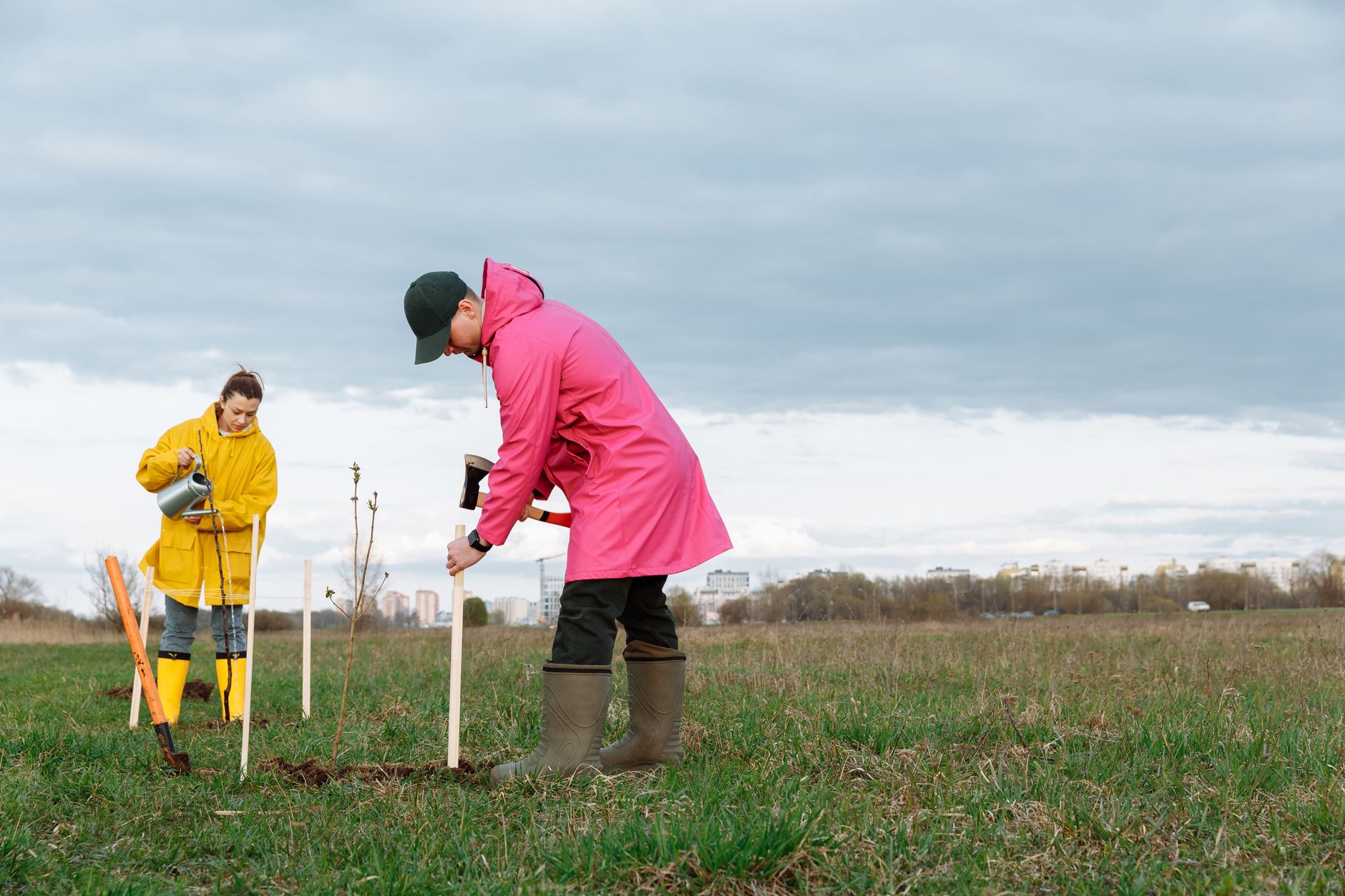
Plant between November and March while trees are dormant, avoiding frozen or waterlogged ground. A planting day for 20 trees needs roughly 15 people and four hours. Anyone who has handled starting a community garden uk style logistics will find the day familiar, though the digging is considerably heavier work.
- Square pit, 60cm across, with the base loosened — never a slot cut with a spade
- Graft union kept a clear 10cm above the finished soil surface
- Stake driven at 45 degrees, angled away from the prevailing wind
- 60cm spiral or mesh guard against rabbits; deer fencing where browsing is heavy
- One-metre mulch circle, 8cm deep, held well off the trunk
Surviving the first three years
Grass is the enemy, not drought. A one-metre weed-free circle roughly doubles establishment growth compared with mown turf. Water 20 litres per tree fortnightly through the first two summers, prune formatively each winter, and expect to lose one or two trees in twenty — order two spares with the original delivery.
Keeping Volunteers, Sharing the Harvest and Growing the Group
A community orchard planting project UK volunteers stay loyal to is one with clear roles. Twelve reliable people beat sixty on a mailing list. Split duties explicitly: a tree warden, a rota coordinator, a treasurer and a communications lead, each with a named deputy who can cover holidays.
Search a neighbourhood watch scheme how to start guide and the advice reads identically — small, named responsibilities hold a group together far better than a general call for help. Rotate the chair annually, publish dates twelve months ahead, and keep working parties to two hours with tea provided.
Surplus fruit is a genuine asset. Local pantries plus a community fridge how it works notice pinned beside the crates will move 200kg of apples in a fortnight. Volunteers who already know how to volunteer at food bank sessions make ideal distribution partners, because they understand cold storage, allergen labelling and stock rotation.
Be realistic about hunger relief, though. The UK food bank referral process runs on vouchers issued by GPs, schools and support agencies, and fresh fruit sits outside standard three-day parcels. Offer your harvest to pantries and fridges, which are set up for perishables, rather than assuming a warehouse can absorb it.
Fundraising and profile travel together. Anyone who knows how to run a village fete can turn a blossom day or apple pressing into £400 to £900 and thirty new contacts. The same seasonal instinct behind donating clothes to charity uk shops depend on each spring makes autumn juicing sessions genuinely popular.
How long does it take before a community orchard produces fruit?
Expect a light first crop in year three and a meaningful one by year five. A maiden apple on MM106 typically gives 2kg to 5kg in year three, around 15kg by year six, and 40kg to 60kg once established at fifteen years. Plums and damsons often beat apples to the first harvest by a full season. Remove blossom in the first two years so the tree invests in roots rather than fruit; it feels wasteful and it is the single best thing you can do for long-term yield. Plant a mix of early, mid and late varieties so picking spreads across September and October instead of arriving in one impossible week.
Is planning permission required for a community orchard planting project UK groups run on public land?
Planting trees is not development, so express planning permission is almost never needed. What you do need is the landowner’s written consent, confirmation that no Tree Preservation Order or conservation-area restriction applies to existing vegetation you intend to clear, and a utilities search before digging. Sites on registered common land, village greens or land held under a specific charitable trust carry extra restrictions, and works there may require Secretary of State consent. Permanent structures change the picture entirely: a tool shed, composting toilet or hard-surfaced path can each trigger a planning application. Ask your district council’s duty planner informally before committing money — the conversation is free and usually takes ten minutes.
What happens to a community orchard if the volunteer group disbands?
Whatever your lease or licence says will happen, which is precisely why the document matters. A well-drafted agreement names a fallback custodian — usually the parish council, a local wildlife trust or the landowner — who inherits responsibility for mowing and basic pruning if the group folds. Without that clause, trees revert to whoever holds the land, and unmanaged orchards deteriorate within about five years as guards strangle trunks and grass smothers young stock. Build resilience in from the start: recruit across three generations, keep a shared digital folder with variety maps and planting records, and register the site with a national orchard inventory so its existence outlives any single committee.